Source Easter Bunny Soft Toy with Dangle Legs for Gifts, Decor, and Events
Explore 30 listings for the easter bunny soft toy with dangle legs, featuring options in grey, white, pink, and brown. Buyers can compare customization, certifications like CE and ASTM, and sizes ranging from small to large for various gifting needs.
Key considerations
Products List




Comprehensive Sourcing Guide
Strategic Sourcing Guide for Easter Bunny Soft Toys with Dangle Legs
Understanding Product Specifications and Design Variations
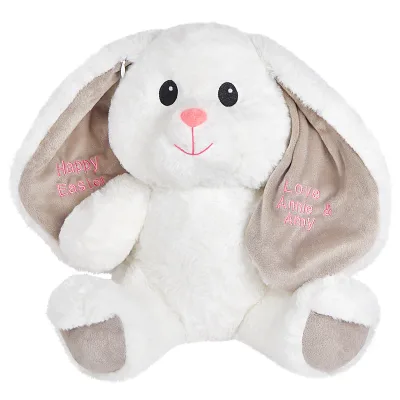
When sourcing an Easter bunny soft toy with dangle legs, buyers must first navigate the diverse landscape of product specifications available in the global market. The core keyword implies a specific silhouette where the legs are designed to hang loosely, creating a playful, relaxed posture often associated with sitting or lying animals. Based on observed market data, the product type is consistently categorized as "Rabbit/Bunny" or generally as "Animal," with specific design styles noted as "Sitting Animal." The modeling source is explicitly defined as animals, ensuring the aesthetic remains true to the biological inspiration while allowing for stylized interpretation.
A critical aspect of the specification is the physical dimension and construction. Observed product models, such as MNTB01, PA-1303, PA-1398, PA-1105, and PA-1099, indicate that manufacturers offer a wide range of configurations. Sizes vary significantly, with specific standards ranging from 30 cm to 80 cm, or even larger custom dimensions like 63x45x58 cm. The market data highlights that "Small," "Medium," and "Short Plush Toys" are common classifications, but buyers should verify the exact "Plush Length" or overall height for each specific SKU, as the term "dangle legs" can affect the perceived size depending on whether the measurement includes the extended limbs.
Material composition is another foundational specification. The primary material identified in the supply chain is Polyester, which is standard for plush toys due to its durability and softness. The filling is typically Cotton, providing the necessary volume and squishiness expected in a soft toy. However, buyers must remain vigilant, as material blends can vary. The production technique is a hybrid of "Machine+Hand Made" or purely "Hand-made," with some entries noting "Machine Production." This distinction is vital for understanding the texture and finish of the dangle legs, as hand-finished seams often provide a more secure attachment for hanging limbs compared to purely automated stitching.
Compliance and Certification Verification
For toys intended for the Easter market, which often targets children, compliance and certification are non-negotiable elements of the procurement process. The observed market data lists a robust array of certifications, including CE, ASTM, EN71, CPSIA, REACH, and SGS. These standards are not merely marketing labels but represent critical safety benchmarks that vary by destination market.
Buyers must verify that the specific supplier's batch holds valid, current certificates for the target export region. For instance, the European market requires strict adherence to EN71 and CE marking, while the United States market mandates compliance with ASTM F963 and CPSIA (Consumer Product Safety Improvement Act) regulations. The presence of REACH certification is also a strong indicator of chemical safety, ensuring that no harmful substances are present in the polyester fabric or cotton filling. Additionally, SGS testing is frequently cited, suggesting third-party verification of physical and chemical properties.
It is important to note that while the data shows these certifications are available, they are not automatically guaranteed for every unit. Procurement teams must request the specific test reports for the model number being ordered, such as PA-1303 or MNTB01, to ensure the dangle legs and any attached accessories (like eyes or noses) meet the required pull-force and toxicity standards. The "Age" attribute in the data ranges from "From 3 Years up" to "All Years," which directly influences the certification requirements. Toys for younger children (under 3) generally face stricter choking hazard regulations, which is particularly relevant for a toy with dangle legs where the attachment points must be exceptionally secure.
Cost Drivers and Pricing Dynamics
The pricing structure for Easter bunny soft toys with dangle legs is influenced by a complex interplay of factors, resulting in a wide observed price range of $0.35 to $20 USD. This variance is not arbitrary but reflects differences in size, material quality, customization level, and order volume. The Minimum Order Quantity (MOQ) ranges from 1 to 5000 units, indicating that the market accommodates both small boutique orders and large-scale retail procurement.
Size is a primary cost driver. A small plush toy, potentially measuring 30 cm, will naturally cost less in terms of material and shipping volume compared to a large version measuring 60 cm or 80 cm. The "Standard" dimensions listed, such as 35-80 cm, suggest that larger sizes command a higher unit price due to increased polyester and cotton usage. Furthermore, the production method impacts cost. "Hand-made" or "Machine+Hand Made" processes are generally more labor-intensive and expensive than "Machine Production" alone. If the dangle legs require intricate hand-stitching to ensure they do not detach easily, this adds to the labor cost.
Customization is another significant variable. The data confirms that "Customization," "OEM/ODM," and "Custom Design" are available. Adding a customer logo via printing or embroidery, or altering the color from standard Grey, White, Pink, or Brown to a specific brand color, incurs additional setup and production costs. The "Sample Time" of 5-7 days for custom designs also implies a premium for expedited prototyping. Buyers should anticipate that a standard, off-the-shelf grey or white bunny with no logo will be at the lower end of the price spectrum, while a custom-designed, large, hand-finished bunny with specific certifications and packaging will approach the higher end.
Typical Applications and Market Positioning
The Easter bunny soft toy with dangle legs serves multiple applications beyond simple play. Its primary market is the seasonal retail sector, specifically targeting the Easter holiday. The "Sitting Animal" style with dangle legs is particularly appealing for display purposes, as the relaxed posture makes the toy suitable for gifting, decoration, and promotional campaigns. The "Gender: Unisex" attribute broadens the potential customer base, making it suitable for all children regardless of gender preferences.
In addition to retail sales, these toys are frequently used as promotional items. The ability to customize the logo allows businesses to brand the toy for corporate giveaways, trade show gifts, or marketing campaigns. The "Item: Plush Toy" classification confirms its versatility as a gift item. The age range of "From 3 Years up" to "All Years" suggests that while it is a toy for children, the soft nature and dangle legs also make it a comforting object for older children or even adults seeking a nostalgic or decorative item.
The packaging specifications, such as "1PC/Bagged/Master Carton" or "1 PC/Polybag, 36 PCS/Carton," indicate that these toys are designed for efficient logistics and retail display. The standard packing of 100 PCS/CTN with a gross weight of 9 kg and net weight of 8 kg suggests a standardized shipping unit that buyers can use to calculate freight costs accurately. The "Carton" packaging ensures protection during transit, which is crucial for maintaining the fluffiness of the polyester filling and the integrity of the dangle legs.
Supplier Evaluation and Technical Capabilities
Selecting the right supplier requires a deep dive into their technical capabilities and operational flexibility. The data indicates that the product origin is China, a major hub for plush toy manufacturing. Buyers should evaluate suppliers based on their ability to handle the specific technical requirements of the dangle leg design. The "Technical" attributes listed as "Machine+Hand Made" or "Hand-made" suggest that the supplier must have a skilled workforce capable of precise stitching to prevent leg detachment, a common failure point in plush toys.
The "Custom/OEM: Yes" and "OEM/ODM: Aceptable" attributes highlight that suppliers should be capable of adapting to specific buyer requirements. This includes accepting "Customers Logo" via print or embroidery and accommodating "Custom Design" requests. A robust supplier will demonstrate flexibility in handling different "prod_model" numbers, such as PA-1303 or MNTB01, and can adjust the "prod_standard" to meet specific size requests like 30 cm, 45 cm, or 60 cm.
Buyers must also assess the supplier's quality control infrastructure, particularly regarding the certifications mentioned earlier. A reliable supplier will have a documented process for ensuring that every batch meets CE, ASTM, EN71, and CPSIA standards. The "Sample Time" of 5-7 days is a key metric for evaluating responsiveness. A supplier that can deliver a high-quality sample within this timeframe demonstrates efficiency and a streamlined production process. Additionally, the "prod_packing" details, such as the specific carton configurations, should align with the buyer's logistics needs to minimize damage and maximize shipping efficiency.
Quality Control and Long-Term Procurement Considerations
Ensuring long-term success in sourcing these toys requires a rigorous quality control (QC) strategy. The "dangle legs" feature presents a specific mechanical challenge; the attachment points must withstand repeated pulling and handling. QC protocols should include rigorous pull tests on the legs to ensure they remain securely attached, especially for toys marketed to younger children. The "Filling: Cotton" must be evenly distributed to prevent lumps that could affect the toy's appearance and comfort.
For long-term procurement, buyers should consider the consistency of the "Material: Polyester" and "Color" options. The data lists Grey, White, Pink, and Brown as common colors. Buyers should request color swatches to ensure that the dye fastness meets international standards, preventing color bleeding during washing or exposure to sunlight. The "Standard" of 63x45x58 cm or "customized sizes" suggests that buyers should establish clear dimensional tolerances to ensure consistency across large orders.
Sustainability and ethical sourcing are also becoming critical considerations. While the data does not explicitly mention organic materials or fair labor certifications, buyers should inquire about the environmental impact of the polyester and cotton sourcing. The "OEM/ODM" capability allows buyers to work with suppliers to develop more sustainable product lines, such as using recycled polyester or organic cotton, if required by their corporate social responsibility goals.
Finally, the "Sample Time" and "Lead Time" (though not explicitly quantified beyond the sample window) are crucial for inventory planning. Easter is a seasonal event, and supply chain delays can result in missed sales opportunities. Buyers should maintain a buffer in their ordering schedule to account for potential production delays, especially when dealing with custom designs or large MOQs up to 5000 units. By establishing a strong relationship with a supplier who understands the nuances of the "Sitting Animal" style and the specific requirements of the "Easter bunny" market, buyers can ensure a steady supply of high-quality, compliant, and appealing products for the holiday season.
FAQs
What certifications are available for these plush toys?
These toys commonly hold CE, ASTM, EN71, CPSIA, REACH, and SGS certifications. Buyers must verify specific test reports for the model number to ensure compliance with target export regions like Europe or the United States.
Can I customize the logo and design of the bunny?
Yes, customization including logo printing, embroidery, or custom designs is available. Suppliers accept OEM requests and can adjust colors like grey, white, pink, or brown to match specific brand requirements.
What are the typical size options for the soft toy?
Standard sizes range from 30 cm to 80 cm, with some custom dimensions reaching 63x45x58 cm. The product is classified as small, medium, or short plush depending on the specific model selected.
How is the production method handled for these toys?
Production techniques include machine production, hand-made assembly, or a combination of both. Hand-finished seams are often used to ensure secure attachment of dangle legs and improve overall durability.
What is the minimum order quantity for these items?
The minimum order quantity ranges from 1 to 5000 units depending on the supplier and customization level. Small boutique orders are accommodated alongside large-scale retail procurement needs.
Which materials are used for the filling and outer fabric?
The outer material is typically polyester, while the filling consists of cotton. This combination provides the softness and volume expected in high-quality plush toys for the Easter market.
How long does it take to receive a sample?
Sample time is typically 5 to 7 days for custom designs. This timeline allows for prototyping and ensures the dangle leg attachment meets quality standards before full production begins.